
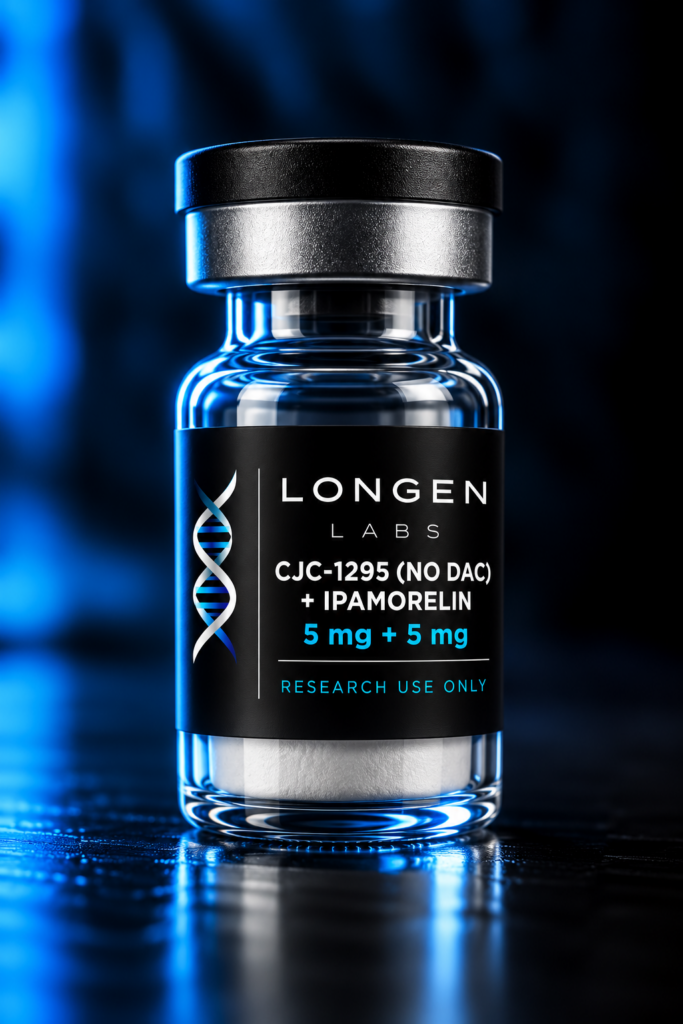
A two-component research formulation combining a GHRH-pathway analogue with a growth-hormone secretagogue, allowing investigation of two distinct signalling mechanisms converging on the GH axis. Both components and their quantities should remain explicitly identified.
| Title | Range | Discount |
|---|---|---|
| 4 vials (15% discount) | 4 - 7 | 15% CHF 58.65 |
| 8 vials (25% discount) | 8 - 11 | 25% CHF 51.75 |
| 12 vials (35% disocunt) | 12 + | 35% CHF 44.85 |
CJC No DAC + Ipamorelin is a dual-peptide research formulation combining two synthetic compounds that interact with distinct receptors involved in growth hormone (GH) regulation.
CJC-1295 without DAC, also known as Modified GRF (1-29), is a synthetic analogue of growth hormone-releasing hormone (GHRH). It has been investigated for its ability to stimulate pituitary growth hormone secretion through GHRH receptor activation. Unlike the DAC-containing version, it lacks the albumin-binding modification responsible for prolonged activity.
Ipamorelin is a synthetic pentapeptide that acts as a selective growth hormone secretagogue receptor (GHS-R1a) agonist. It interacts with the ghrelin receptor, activating a signaling pathway involved in endogenous growth hormone release.
CJC No DAC + Ipamorelin 5 + 5 mg is presented as an experimental dual-peptide formulation for laboratory and scientific applications. The stated quantities refer to 5 mg of each compound, totaling 10 mg, and should not be interpreted as recommended human dosages.
Product: CJC No DAC + Ipamorelin
Strength: 5 mg + 5 mg (10 mg total)
Alternative names: Modified GRF (1-29) + Ipamorelin
Category: Growth Hormone
Compound classification: Dual synthetic growth hormone secretagogue formulation
Research target: Growth hormone-releasing hormone receptor (GHRHR) and growth hormone secretagogue receptor (GHS-R1a)
Research focus: Growth hormone signaling, pituitary regulation, receptor interactions and GH–IGF-1 axis physiology
Mechanism: Complementary activation of GHRH and ghrelin receptor pathways involved in endogenous growth hormone secretion
Pharmacological profile: Experimental dual-peptide formulation investigated through established receptor pharmacology, with limited direct clinical evidence for the specific combination
Intended use: Laboratory and research use only
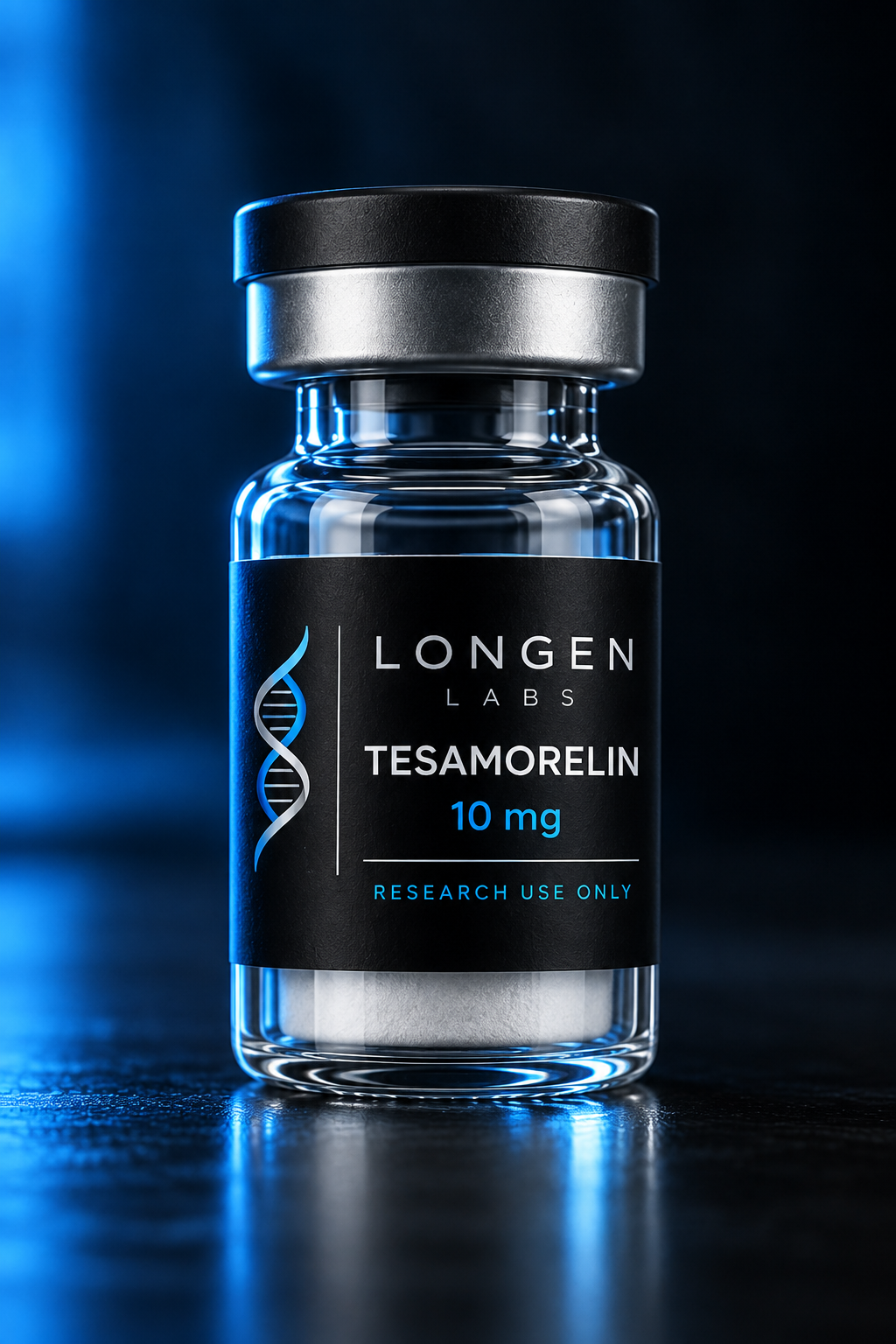
A synthetic analogue of growth hormone-releasing hormone (GHRH) studied through the GHRH receptor and downstream GH/IGF-1 axis. Research areas include endocrine signalling, growth-hormone physiology and metabolic regulation.
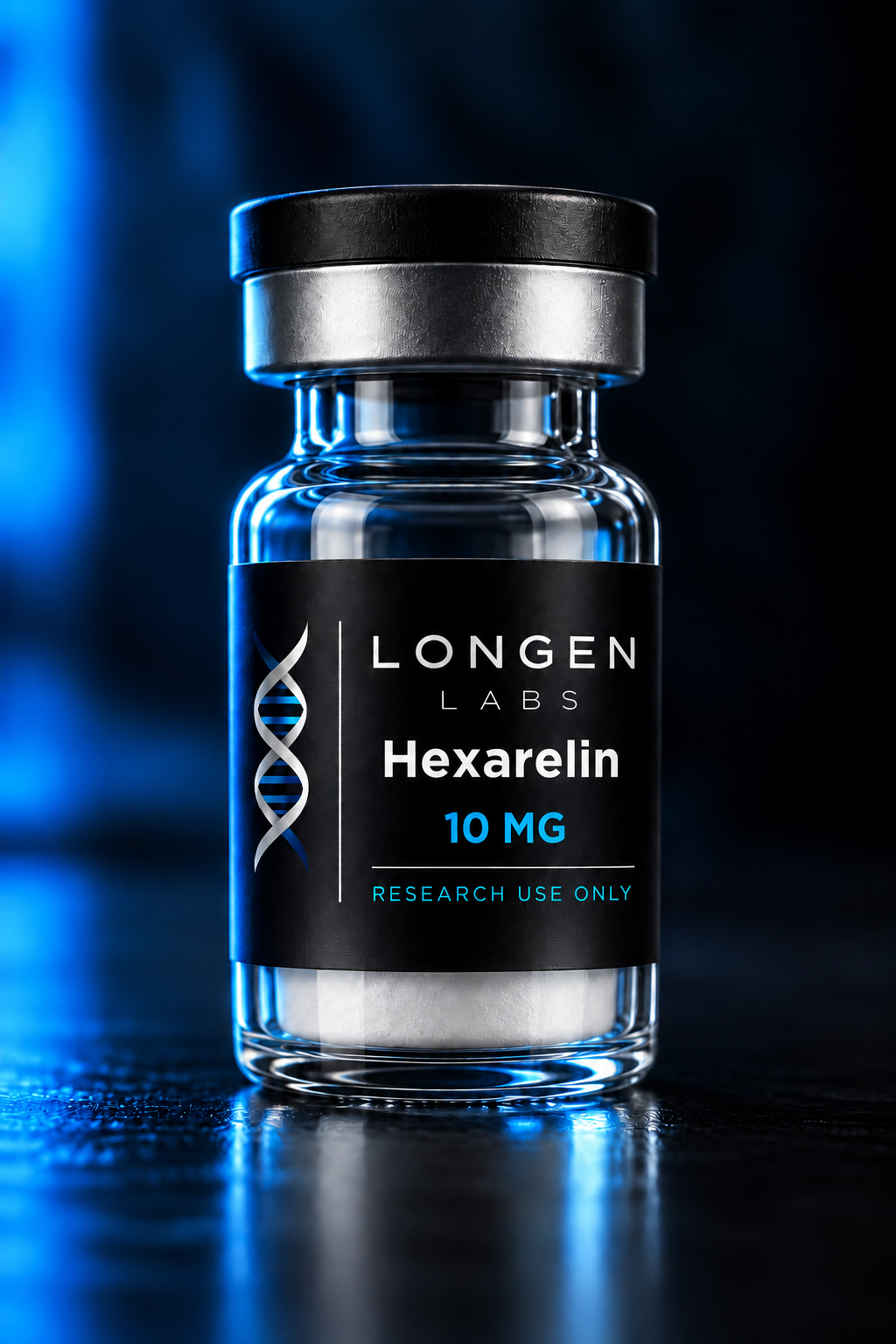
A synthetic growth hormone secretagogue peptide investigated for its activity at the ghrelin receptor (GHS-R1a) and its influence on growth-hormone signalling pathways. Its research landscape includes GH secretion, neuroendocrine regulation and metabolic signalling.
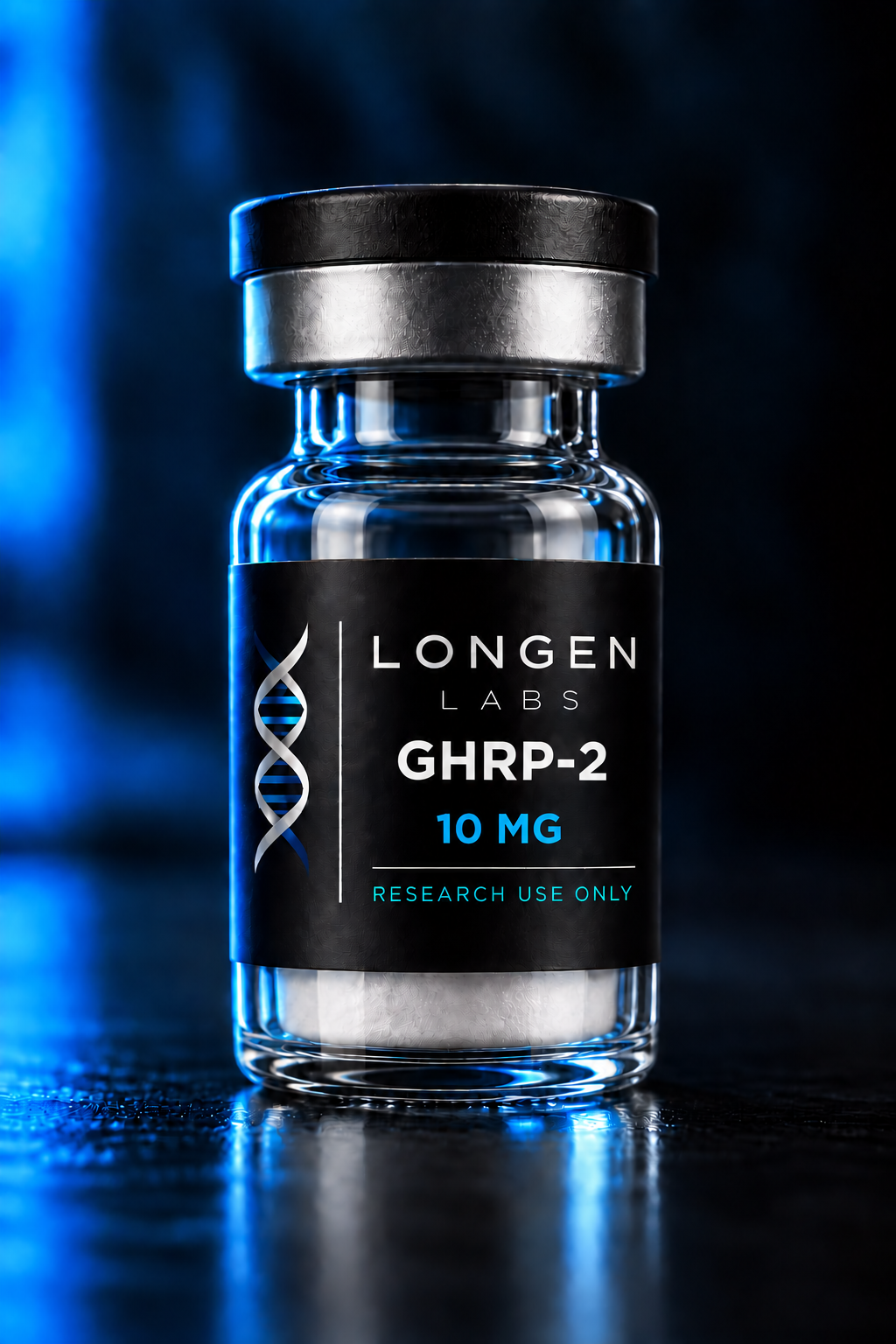
A synthetic growth hormone-releasing peptide investigated for its activity at the ghrelin receptor (GHS-R1a) and its influence on growth-hormone secretory pathways. Its research landscape includes GH release, pituitary signalling and neuroendocrine regulation.
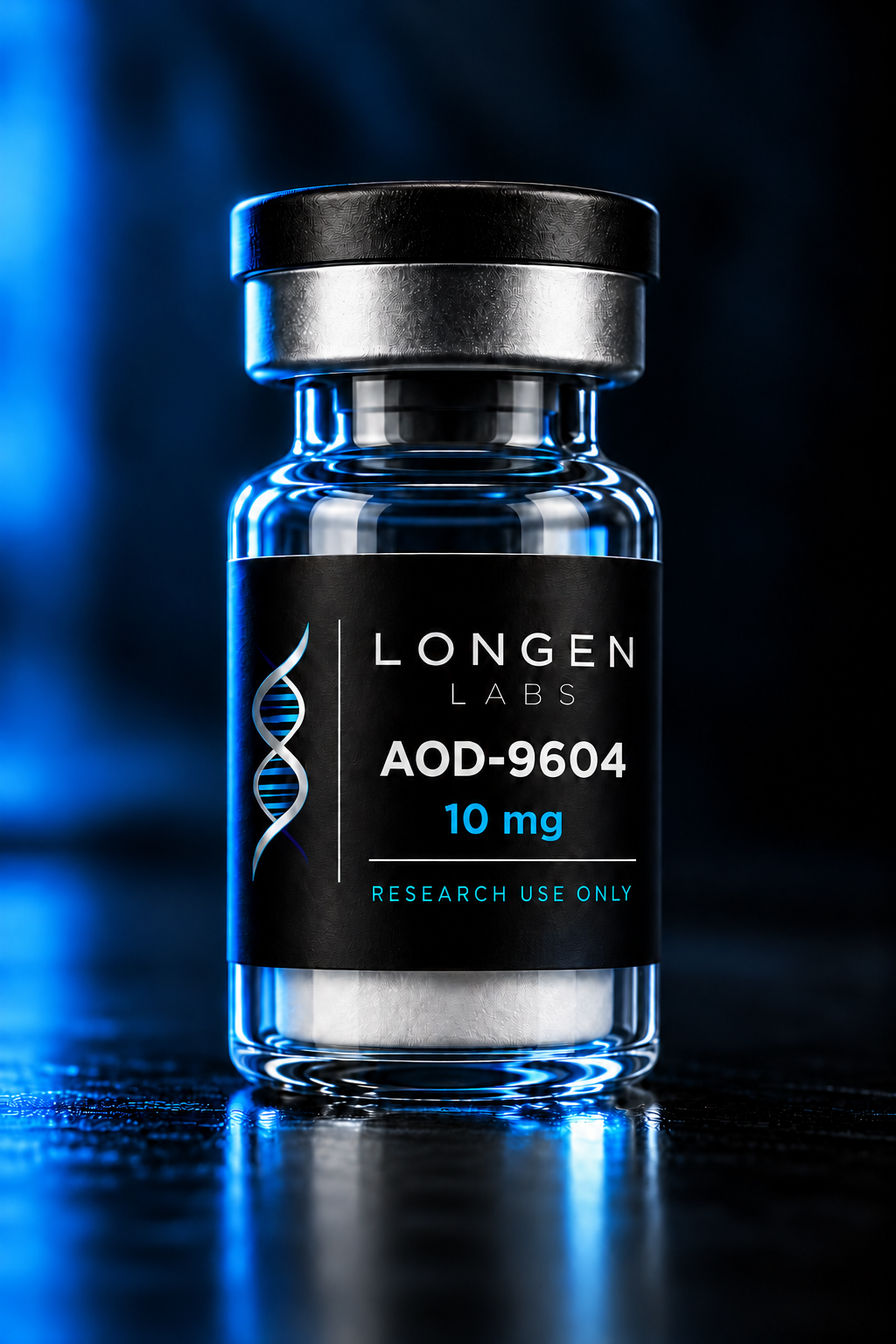
A synthetic fragment derived from the C-terminal region of human growth hormone. Research focuses on the biological properties of this fragment and its relationship to metabolic and GH-associated signalling without representing the complete GH molecule.
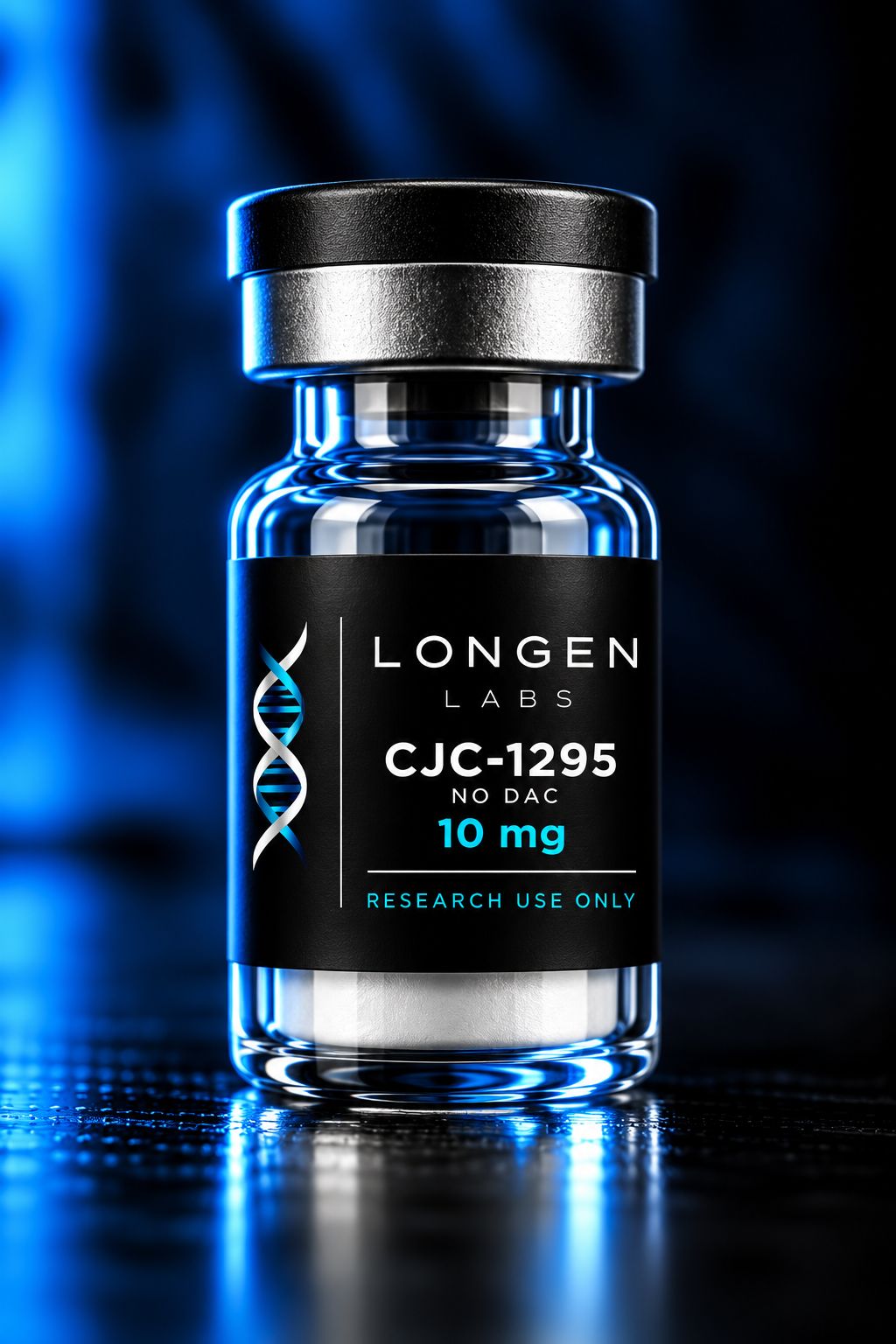
A short-acting GHRH-analogue research peptide used to investigate growth-hormone-releasing pathways and GH/IGF-1 signalling. The No-DAC form must be clearly distinguished from albumin-binding CJC-1295 with DAC because their molecular designs are not equivalent.
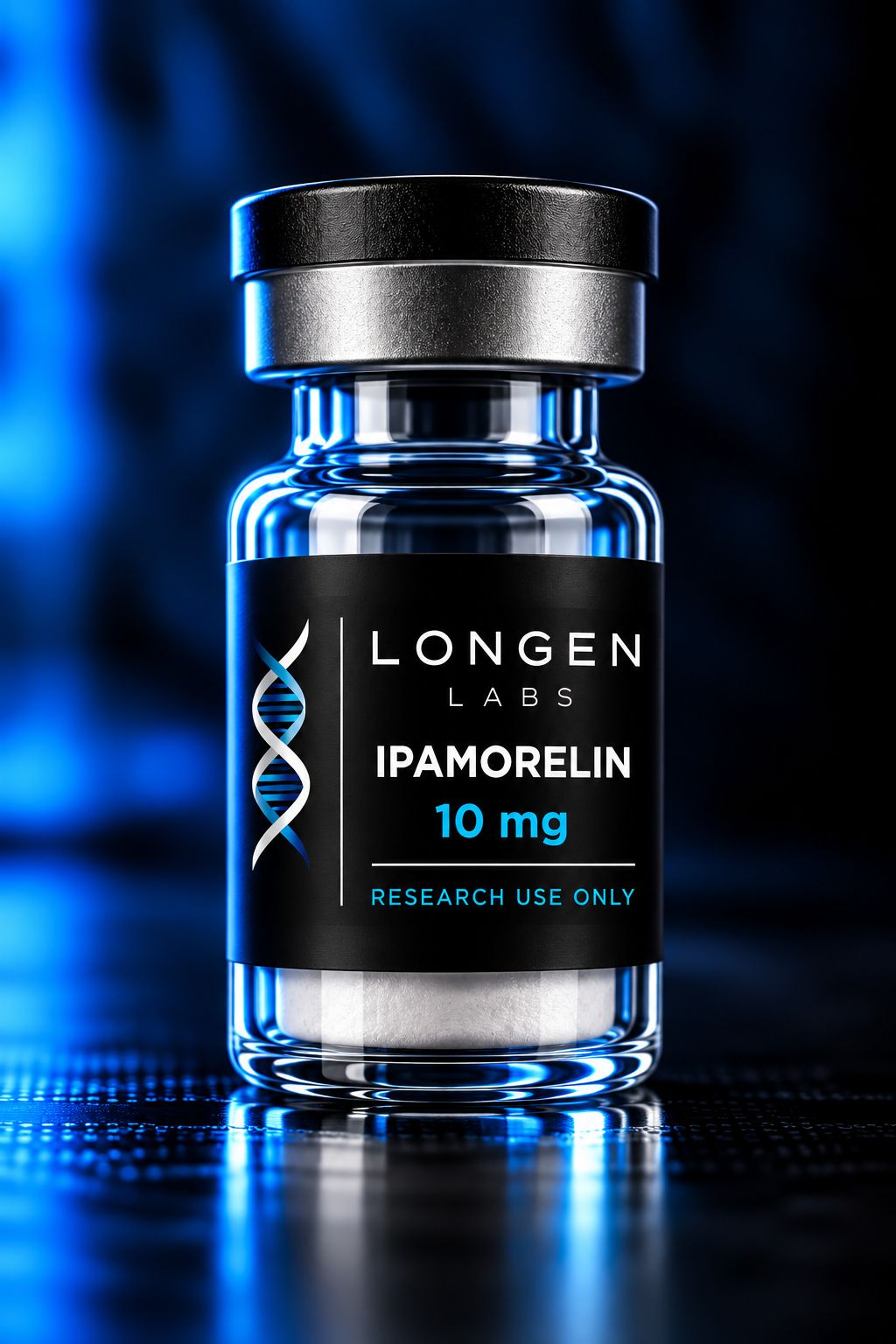
A growth-hormone secretagogue investigated through ghrelin/GHS receptor signalling and downstream GH physiology. It provides a mechanistically different research route into the GH axis than GHRH analogues such as CJC-1295 and tesamorelin.
To provide the best experience, we use cookies and similar technologies to store and access device information. With your consent, we may process data such as browsing behavior or unique identifiers to improve site functionality and analytics. You can change or withdraw your consent at any time.